Here are some of the key elements of the #COP26 agreement: WE SHOULD KEEP WATCHING
– Expresses “alarm and utmost concern” at the fact human activities have caused around 1.1C of warming, and that the Earth’s remaining “carbon budget” consistent with 1.5C is being “rapidly depleted”.
– Stresses the “urgency of enhancing ambition and action” in the 2020s to have any hope of meeting the goals of the Paris Agreement.
– Calls up parties to “phase down” unabated coal power andinefficient fossil fuel subsidies.
– Invites parties “to consider” further action to cut greenhouse gas emissions, including methane, at a greater rate by 2030.
– Expresses “deep regret” that the goal of developed countries to mobilise 100 US dollars a year by 2020 for developing countries to tackle climate change has not been met
– Urges developed countries to fully deliver on the 100 billion US dollars goal urgently and through to 2025.
– A new post-2025 long term finance goal for climate finance for developing countries will be negotiated from 2022 and set in 2024 under the proposals.
– Reiterates the “urgency of scaling up action and support, including finance” to developing countries to help them “avert, minimise and address” loss and damage associated with climate change.
– Emphasises the importance of “protecting, conserving and restoring nature and ecosystems” to achieve the goal of the Paris Agreement of limiting warming to 1.5C and well below 2C.
– Recognises the role of “indigenous peoples, local communities and civil society, including youth and children” in addressing and responding to climate change.
JOURNEY WITH A GREAT MYSTIC HIS HOLINESS YUGPURUSH SWAMI PARAMANAND JI
Dr. (Capt.) G. S. Kadiyan
I was in search of a spiritual guide and in the process met many monks and gurus and had varied experiences. I was awe-struck when the contents of three questions which I had written when I was alone were not only repeated, but the spelling mistakes that I knowingly made were also present without referring to the slip in my pocket. The person doing this was not any saint or monk, but a police officer in charge of Babugarh where I was posted during my short stint in the Indian Army. He promised to teach me this art of mind reading after I met his guru. Within a week I, along with my family, were witness to the wonderful and breath-taking powers of Lahri Baba who could produce anything you demanded out of thin air. It was by no means a slight of hand or mesmerism. I discussed the phenomenon with my friends who were interested in the subject. It transpired that these phenomena have no concern with spirituality, but are instead a part of the cosmic illusion (maya) or the net from which we want to escape to meet Absolute reality.
Such thinking was further confirmed when I read, “Swami Vivekanand, The Spiritual Lion of India,” whose roar is still inspiring humanity. He was approached by a person possessing the powers to materialize things from “no where” to relieve him of his chronic fever. He requested Swamiji to place his hand on his head as he did not have the power to heal himself. Swami Vivekanand insisted that the person demonstrate his powers to materialize things out of thin air first. The man produced things double his weight including fresh roses with dew drops on their petals out of thin air. Swami Vivekanand commented that such powers are NOTHING BUT AN IMITATION OF A HIGHER REALITY. These are not miracles, but are powers of an appropriately trained mind under the laws of nature which are unknown to the ordinary masses. This is not the destination of spirituality. However, some people use such powers for psychic healing as an alternate system of medicine for the good of mankind.
MEETING THE MASTER
Even after meeting many such gurus or monks with extraordinary powers, my inner quest remained unsatisfied. I was still in a dilemma and in search of a perfect master, a poorna purush. One day I was sitting in my office which was located on Jail Road, Banda (U.P.) near the main ground where a bhakti yoga Vedanta sammelan (spiritual conference) was going on. I was attracted to the roar of a young sadhvi whose entire discourse on Vedanta philosophy was soul-stirring and extraordinary. I left my office and joined the crowd. Her discourse was followed by another magnetic personality who started with the words, “Some people are wandering in the search of a Guru.” I was stunned, but at the same time focused and fully absorbed in the words he was speaking. For me, there was no crowd, no world around and I felt that the entire discourse was for me alone. I had a concept of a deeper unity beneath all apparent diversity and omnipresence of a power usually called God. But it was a heard concept only and not my own realization or my own experience. During the discourse, I felt as if layer after layer was being torn apart in my mind and I realized that this unity or singularity is not a mere concept, but a reality. I remained in a trance, out of the world state for about a week before I could finally settle down to my “normal” way of being.
I tried to approach the saint to pay my regards, but my way was blocked by people eager to touch his feet. I heard another mantra from this holy man: “Leave my way. You will not get anything by touching my feet unless you chew, digest, assimilate and practice what I have said.” I shall remain forever grateful to Swami Jagat Parkash Taygi who introduced and was instrumental in my getting the gift of initiation from SWAMIJI. The sadhvi was none other than the present-day DIDIMAA-RITAMBHARAJI. I am thankful to God Almighty for throwing me in the fold of YUGPURUSH because the ultimate fruit of all spiritual practices is being blessed by a God-realized saint who is himself one with reality. TULSIDASAJI in RAMCHARITMANANS has said
“Bin satsang vivek na hoi, Ramkripa bin sulabh na soi
Satsangat mudmangal moola, soi siddhi sabsadhan foola”
(The fruit/culmination of all spiritual practices and the root of all goodness, happiness and sacredness are in the meeting of a true saint, while spiritual practices on their own are flowers only. One does not attain ultimate wisdom without satsang (company of saints), which one gets only with the grace of God.)
OUTSTANDING TRAITS OF THE MULTIDIMENSIONAL PERSONALITY OF HIS HOLINESS YUGPURUSH SWAMI PARMANANDJI MAHARAJ
Although it is impossible to give a pen picture of the multidimensional personality of SWAMIIJI, I will point out a few traits that have left an indelible mark on my psyche:
Simplicity: He is a simple and down-to-earth; Sometimes it is hard to believe that you are face-to-face with a spiritual giant of this century.
A Saint Soldier: He is not only concerned with the abstract concept of God and Spirit, but his approach is practical. His teachings can guide us not only on the spiritual path, but are guiding stars for our day-to-day life with regard to realizing our potential which is huge and vast. He feels deeply concerned with the day-to-day affairs of society around him. He contributes to the larger welfare of humanity and many educational institutions, hospitals and centers of spiritual guidance stand as a testimony to this.
Mastery in all limbs of Yoga Philosophy: Spirituality is concerned with joining with our true self and there are numerous paths leading to the same destination. He has direct experience of reality and the finer aspects of inner Sadhna are absolutely clear to him. Although a staunch jnana yogi and master ofVedanta philosophy, he crystallizes differences between Sadmadhi attained through yoga and Samadhi attained through the process of Vedanta. Yoga describes Samadhi as restraining the mind stuff (chitta) from taking various forms (vritti). On the other hand, Vedanta declares knowledge of the essence of truth (tatvabodha) as Samadhi. It is impossible to crystallize the difference until one has practiced both.
Yoga for health: Even at this age, he has demonstrated all the physical postures of Yogic exercises and the suppleness of his body tells the story of his intense Sadhna done during his youth. Arrangements are made for teaching yogic postures and yogic breathing under expert advice at all meditation camps. It has been proved that yogic breathing stimulates the vagus nerve, which in turn affects portions of the brain i.e., the frontal lobe and the brain stem, which decrease anxiety, worry and depressive moods.
Meditation techniques: Although ultimately all techniques have to be dropped for the direct experience of reality, meditation is an indispensable part of Sadhna. He gives various techniques that suit people of different backgrounds and temperaments to reach at the pinnacle of Sadhna, “the state of Samadhi.” Generally, people have a notion that Samadhi is a business while sting with your eyes closed and being away from vicissitudes of life. Swamiji however, puts you in a state of effortless effort where anything you do becomes Sadhna for Samadhi. Ultimately, you reach a state where whatever you do you are doing it from that exalted state of Consciousness – Jagrat Samadhi. I quote below his views on this point:
“There are so many paths. But you choose that which with you feel comfortable. That is why I am not in opposition with any path. I can see opening the knot of ignorance in the mind stuff (chit) of Sadhak by repetition of Mantras, by meditation and also through the vedantik practice and I have my regards for all of these. I love them equally. Although, I believe that the ultimate truth is Vedanta. But to impose Vedanta of others is not my habit. I will judge your temperament and advise you accordingly.”
YUGPURUSH SWAMI PARAMANANDJI
Tremendous physical endurance: If you have a glance at his itinerary, it will become evident that every single moment of his life is dedicated to the service of humanity. He reaches unknown corners of rural India and travels to America/ Russia/ Europe to spread his message. He does not care for his fatigue of the journey and again starts ever fresh. A few minutes of personal solitude from the crowd makes him fresh.
Tips for relaxation and peace of mind: Any negative tendency such as anger, jealousy, hatred, depression, etc., is called vikshep. He advises the seeker to jump out of these negativities and it works wonders. The moment that you start to find reasons and methods to remove these feelings, we unknowingly support and further feed them by giving them greater strength. There are so many other tips that he gives during his discourses that are beneficial in our day-to-day life.
His safi contains secrets of the universe: When he takes off his head gear (safi) you can be sure that he is taking you into the fourth state of consciousness (Turiya), which is difficult to attain even after years of sadhana. He puts three knots in his safi designating each on as the Awakening, Dream and Deep Sleep states of consciousness. Then he opens the knots one by one and finally points to the safi that remains unaffected whether the knots are there or not. This represents the fourth state in which all other states rise and fall. This fourth state is not even a state of consciousness, but a “state of Being,” where everything happens and is changeless and always a Witness to change whether in the inner sphere of mind and intellect or in the outer world.
Shuns miracles: Swamiji is often invited by other spiritual heads in their asharams for his grasp on the subject and making the finer inner points crystal clear to his audience. I was attending a Meditation Camp at Haridwar at SWAMIJI’S Akhand Paramandham Ashrama. SWAMJI was invited to another ashrama, Paramanand Bhandar (kankhal) for his discourse. SWAMIJI generally travels in his own van and some of his literature and audio and video cassettes are permanently stored there. After the discourse was over, SWAMIJI returned to his own ashrama (Akhand Paramandham) by car sent by Paramanand Bhandar and we took some time in getting assembled near the van of Swamiji, as the group was scattered. The driver tried his best to start his van, but to no avail. We tried to start the van by pushing it and even called a road-side mechanic to help, but the van would not start. In the meantime, the driver of the car who had left SWAMiJI at his ashrama returned back and asked for a particular audio cassette from us. SWAMIJI asked him to get it from the van. Immediately, after the cassette was handed over, the van’s engine fired without any mechanical assistance. SWAMIJI had told him, “You will find the van at your ashrama.” This was what the car driver found.
When this was mentioned to SWAMIJI, he took no interest and told that there is nothing miraculous about it. Any person who has no personal desires and lives for the larger benefit of humanity, for him, all the forces of nature are subservient. The saints generally don’t demonstrate their powers and miracles just happen in their presence and they advise spiritual seekers not to be distracted from their final destination by indulging in these small tricks. This destination is nothing but to “KNOW THYSELF.”
Impossible to judge him: You can predict God, but not a Jnani and it’s not possible to judge him by his actions. No law applies to a Jnani because he is firmly established in his supreme self. The supreme self is beyond the world of intellectual distinctions and opposites to reach the world of achintya – the unthinkable, where reality appears as the undivided and undifferentiated “suchness.” All actions of a jnani are from a different level of consciousness that is beyond the reach of ordinary masses.
Believes in effortless effort: According to SWAMI PARAMANANDJI, the self can be reached not by any action or effort but by non-action alone or a complete stillness. Any effort in search of the self is like riding on an ox in search of an ox. General masses have the notion that strenuous efforts are required on the path. Contrary to this opinion is the notion that it is only in effortlessness that the attainment of peace and bliss are rendered. This idea of doing something or achieving something generates tension and in tension we lose our self-attention.
A MESSENGER OF UNIVERSAL RELIGION – SPIRITUALITY
Generally, the terms religion and spirituality are used synonymously and the vital difference between them is not clear to the masses. Without going into academic discussions, spirituality can be termed as a distilled religion that is bereft of all apparent impurities and their distinctions. This concept becomes clear by understanding that spirituality is a universal religion that is devoid of various dogmas, conflicting and opposing viewpoints, rituals and deep-set prejudices. The content of religion appears irrational because the truths realized by their founders are beyond the ordinary states of consciousness that are generally conveyed second-hand to the masses. In this process, the truths got contaminated and the degree of contamination is dependent upon the regional and social norms and environment. Consequently, it became more socially oriented and acquires a definite place in the smooth running of social organizations. The moral and ethical commandments, although based on some sublime truths, appear to be unpalatable because they appear to be imposed as they have not been examined in the light of one’s own experience.
Spirituality is concerned with truth – the ultimate reality, which does not change with time and space and requires an equally unchanging consciousness to appreciate it. This consciousness lies beyond the ordinary state of consciousness through which we try to understand the world and ourselves. Hence, we have to transcend this ordinary state to reach the state of our self – our true being. To live in this state of expanded awareness is to be enlightened.
Spirituality is holistic and addresses the body, mind and spirit. A good, ordered and successful life are its by-products. Materialism and spirituality are in perfect harmony and not in opposition to each other. It is a way of life that supports and sustains life. It transcends good and bad. It tells you that you are neither good nor bad, but the supreme self. You are “being” and not “becoming.” We become good and bad, right or wrong, happy or unhappy, poor or rich, but in reality we are just “being” – Existence, Bliss, Consciousness (satchit anand).
PRACTICAL APPLICATIONS OF SPIRITUALITY
Spirituality is a requirement of the common man more than of monks and ascetics. Contrary to the belief that religion and spirituality are losing their hold, a large number of cooperate offices are arranging classes for meditation. It’s surprising to hear big words like enlightenment, dhyana, karma, and yoga from modern youth and top executives from the corporate world. They have understood the vast potential of spirituality for the development of the individual, organization and society as a whole. A few aspects of this indescribable phenomenon are described here:
Increased efficiency: So far we are aware of the intelligence quotient (IQ) which is a parameter of rational intelligence. Now a scientist, Daniel Coleman, has added an emotional quotient (EQ). The EQ is a parameter of emotional intelligence and feelings such as empathy, compassion, motivation and ability to respond to pain and pleasure appropriately. Another team of scientists, Danah Zohar and Ian Marshall, have introduced the spiritual quotient (SQ). The SQ, also called the soul’s quotient, has several dimensions. The most critical dimension is the handling of the Ego, which has been described as the root cause of all the problems of humanity by spiritual masters. The other dimensions are wholeness, gratitude, selfless service and self-esteem. SWAMI PARAMANADJI gives a simple way of handling the ego just by the process of realignment. He advices to place your ego in the supreme Self (Brahma) instead of the complex of the Body-Mind-Intellect. Once we understand the true import of AHAM BRAHMASMI and BRAHMA AHAMASMI, there will be a fundamental change in our outlook. “As you think, so you become” is a famous saying. Once you are firmly established in your new found identity, there is bound to be a tremendous increase in your efficiency in whatever area you are working.
Unfolds total potential of mind which is vast and infinite. Spiritual practices open the wings of the mind in totality like solar panels of a satellite. Its capacity to absorb energy from the all-pervasive sea of consciousness is increased. It soars to the heights of the unknown realms of consciousness. In the process, the dark arena of subconsciousness, which is a store house of unlimited talents and potential as well as our weak points, are illumined. Many of us suffer from “HANUMAN COMPLEX,” the legendary figure who did not know his own extraordinary strengths until a Jamavantha came to awaken him to his true strengths. We appreciate our strengths which are definitely much greater than our weaknesses and we can easily handle these negativities.
While doing meditation practice, we are in the inner world and on an adventure trip in terra incognia – the unknown and boundary-less world of the mind’s imagination, which has no edges. Hence, we must do such practices under the guidance of a realized soul. He acts like the ground control of a space satellite to guide the journey in the right direction.
Objectivity and change in attitudes: Meditation teaches both the art of living as well as dying while living because otherwise, life cannot take a full circle and cannot be apprehended in its totality. We learn the art of living to the essentials of dying to nonessentials. The consciousness in human beings has the power of detachment, meaning to stand back and observe things as a spectator. We observe not only what lies outside in the environment, but also our internal thoughts and feelings. This process of detachment makes for a reflective intelligence as distinguished from reactive intelligence of an animal. Armed with this power, we lean not to react to situations in our day-to-day life, but to be the detached witness. This teaches us to look at problems from a different perspective and adopt different attitudes to the same thing, event or problem. Our whole outlook towards life changes and we are able to spot alternative ways of dealing with out day-to-day problems without losing equilibrium of the mind.
Transformation of personality: Spiritual practices have the potential to totally transform the human personality by exploring our own self and reaching the universal self – the unifying base of the universe. We are able to fulfill our only duty in the world – to KNOW THYSELF. Contrary to the general belief that spirituality is for either retired or retarded people, a self-realized soul is fit for both worlds. As CHUNG TZU, a philosopher has said, “Fully realized human beings by their stillness become sages; by their movement kings.”
I would like to express my thanks to Sadhvi CHATTANYA SINDHU for inspiring me to contribute my services through the article and to DR. NARAYAN PRASAD in getting me slightly focused on the topic of spirituality. I bow my head in reverence to all saints and sages whose thoughts have inspired and given strength in times of crises and to HIS HOLINESS YUGPURUSH SWAMI PARAMANANDJI MAHARAJ for being all that I am.
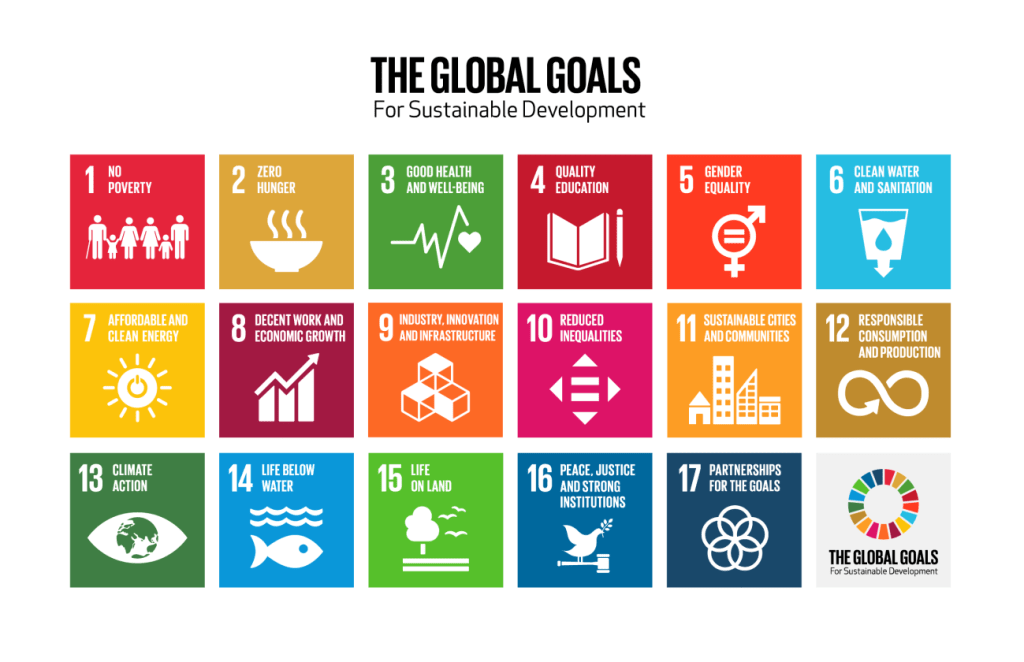
We at SolGrow are Aligned to the following Goals & their Targets: THIS IS OUR BUSINESSEnsure Healthy Lives & promote well- being for all at all ages
3.4
By 2030, reduce by one third premature mortality from non-communicable diseases through prevention and treatment and promote mental health and well-being
3.5
Strengthen the prevention and treatment of substance abuse, including narcotic drug abuse and harmful use of alcohol
3.6
By 2020, halve the number of global deaths and injuries from road traffic accidents
3.9
By 2030, substantially reduce the number of deaths and illnesses from hazardous chemicals and air, water and soil pollution and contamination
Ensure Inclusive & equitable quality education & promote lifelong learning opportunities for all
4.7
By 2030, ensure that all learners acquire the knowledge and skills needed to promote sustainable development, including, among others, through education for sustainable development and sustainable lifestyles, human rights, gender equality, promotion of a culture of peace and non-violence, global citizenship and appreciation of cultural diversity and of culture’s contribution to sustainable development
Ensure availability & sustainable management of water & sanitation for all
6.3
By 2030, improve water quality by reducing pollution, eliminating dumping and minimizing release of hazardous chemicals and materials, halving the proportion of untreated wastewater and substantially increasing recycling and safe reuse globally
6.4
By 2030, substantially increase water-use efficiency across all sectors and ensure sustainable withdrawals and supply of freshwater to address water scarcity and substantially reduce the number of people suffering from water scarcity
6.6
By 2020, protect and restore water-related ecosystems, including mountains, forests, wetlands, rivers, aquifers and lakes
6.a
By 2030, expand international cooperation and capacity-building support to developing countries in water- and sanitation-related activities and programmes, including water harvesting, desalination,water efficiency, wastewater treatment, recycling & reuse technology
Ensure access to affordable, reliable, sustainable & modern energy for all
7.2
By 2030, increase substantially the share of renewable energy in the global energy mix
7.3
By 2030, double the global rate of improvement in energy efficiency
7.a
By 2030, enhance international cooperation to facilitate access to clean energy research and technology, including renewable energy, energy efficiency and advanced and cleaner fossil-fuel technology, and promote investment in energy infrastructure and clean energy technology
Promote sustained, inclusive & sustainable economic growth, full & productive employment & decent work for all
8.4
Improve progressively, through 2030, global resource efficiency in consumption and production and endeavour to decouple economic growth from environmental degradation, in accordance with the 10-year framework of programmes on sustainable consumption and production, with developed countries taking the lead
8.8
Protect labour rights and promote safe and secure working environments for all workers, including migrant workers, in particular women migrants, and those in precarious employment
8.9
By 2030, devise and implement policies to promote sustainable tourism that creates jobs and promotes local culture and products
By 2030, upgrade infrastructure and retrofit industries to make them sustainable, with increased resource-use efficiency and greater adoption of clean and environmentally sound technologies and industrial processes, with all countries taking action in accordance with their respective capabilities
Make cities & human settlements inclusive, safe, resilient & sustainable
11.6
By 2030, reduce the adverse per capita environmental impact of cities, including by paying special attention to air quality and municipal and other waste management
Ensure sustainable consumption & production patterns
12.2
By 2030, achieve the sustainable management and efficient use of natural resources
12.4
By 2020, achieve the environmentally sound management of chemicals and all wastes throughout their life cycle, in accordance with agreed international frameworks, and significantly reduce their release to air, water and soil in order to minimize their adverse impacts on human health and the environment
12.5
By 2030, substantially reduce waste generation through prevention, reduction, recycling and reuse
12.6
Encourage companies, especially large and transnational companies, to adopt sustainable practices and to integrate sustainability information into their reporting cycle
12.8
By 2030, ensure that people everywhere have the relevant information and awareness for sustainable development and lifestyles in harmony with nature
Take urgent action to combat climate change & its impacts
13.3
Improve education, awareness-raising and human and institutional capacity on climate change mitigation, adaptation, impact reduction and early warning
Conserve & sustainably use the oceans, seas & marine resources for sustainable development
14.1
By 2025, prevent and significantly reduce marine pollution of all kinds, in particular from land-based activities, including marine debris and nutrient pollution
Protect, restore & promote sustainable use of terrestrial ecosystems, sustainably manage forests, combat desertification, & halt & reverse land degradation & halt biodiversity loss
15.2
By 2020, promote the implementation of sustainable management of all types of forests, halt deforestation, restore degraded forests and substantially increase afforestation and reforestation globally
Sobering thought: approx 9 million & counting tested positive & the figures catching up to half a million departed
Lives as usual disrupted- work life, social life, educational life, family life, religious life, leisure life
We are to be forgiven for not forgiving the perceived wrongdoers/initiators of this once in a lifetime (earth’s lifetime) event
Human imprudence/stupidity is a greater force than previously thought; maybe it has to be factored in all future calculations by the wise/ for the wise/ of the wise.
Was our earlier path defined by the wise & happily lapped up by us masses for future growth leading us to a better future? This forced change of lifestyle is most beneficial for the Earth’s longevity if not ours
Do we forgive & get back quickly to the erstwhile way of life or this episode changes us for the better? Secretly longing to go back to the good old bad days.
Humility & gratitude were much abused words BC (Before Corona), maybe they become a reality now.
The flux in emotions is enormous both individually, societally & nationally- the expressions of which are visible in unruly protests & nonsensical actions by large groups. COVID is affecting more than the body it has stated affecting the minds also (even nations)
Adventurous actions by (perceived wrongdoer/ initiator) leadership over the last few months on many fronts shows a collective tired of internal battle against the unknown virus now going out to pick known fights- it is a sobering thought- a progressive/ world leading entity firing blindly to get out of a tough spot. It has to be calmed down, the world needs to give it a patient hearing (psychosocial & mental health support), if only for the Worlds sake. It might lead to a reasonable response.
“There are hundreds of thousands of microbes surrounding us, but they cannot harm us unless we become weak, until the body is ready & predisposed to receive them.
There may be a million microbes of misery, floating about us. Never mind! They dare not approach us, they have no power to get a hold on us, until the mind is weakened.”
So takes two to tango; the external world & my inner world
Doing the right things internally insulates us from the external both for corona & mental health
Good Stuff: But this seems to be almost divine teaching with no relation to us mortal beings
SO THE BIG CONTEST: Self Confidence/ Esteem (Practical Vedanta of Swami Vivekananda) Vs Self-Compassion (Compassion of Buddha)
Not an expert on any of these esoteric subjects…just random thoughts based on what I think I know till now on whatever gives comfort to the ailing/weakened mind?
What ails the mind: Loss of job, face, standing in society, relationships, money, image, health etc. OR too much of the good stuff, all of these steal our mental equanimity which in turn makes us inefficient.
Just that the book “Practical Vedanta” published by Advaita Ashram helped me in my personal quest for Self Confidence/ Esteem. My personal take: it should be essential reading for all children in their senior school years so that no one lacks Self Confidence/ Esteem.
However, people then tend to go to the other extreme of….. Superiority complexes; not because of any wrongs in the all-encompassing teachings, but in their selective applications
So we are to also have the heart that encompasses all (Swami Vivekananda sure had it & he was an ardent admirer of Buddha) like Buddha.
Some modern psychologists say that it is better to have more of Self Compassion (Living in present + Shit happens with everyone; take it in your stride; not alone in this + be as kind to yourself as we are to others (best friends) when something bad happens) than Self Esteem.













 SolGrow Consulting (OPC) Pvt Ltd